

Attempts to wash away blood from a crime scene may be less effective than offenders assume, with new Australian research showing that both DNA and haemoglobin can persist even after cleaning with common household products.
A study led by Flinders University forensic scientists has examined how different cleaning agents affect the persistence and detection of blood-derived DNA and haemoglobin on cotton fabric and metal knife blades. The findings highlight important distinctions in how biological evidence survives — and how it is interpreted in court.
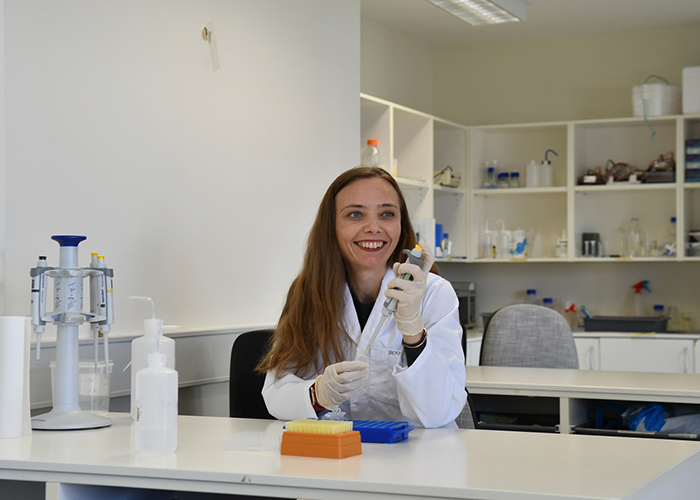
Senior Lecturer in Forensic Science Dr Mariya Goray (pictured) said previous research has typically examined either DNA or haemoglobin in isolation, rather than assessing both together.
“Many studies have investigated the effect cleaning agents have on persistence and detection of blood-derived DNA but not haemoglobin, or the detection and persistence of haemoglobin but not blood-derived DNA,” Dr Goray said.
“Little information is available on the relative removal rates of both haemoglobin and DNA derived from blood following various methods of cleaning.
“This knowledge can be important in cases where the detection of DNA on an item may not be sufficient to link a person of interest to a crime.”
The distinction matters in practical casework. In a domestic dispute involving a stabbing, for example, the presence of a spouse’s DNA on clothing may have an innocent explanation, such as cohabitation. However, if testing can demonstrate that the DNA is likely blood-derived — supported by haemoglobin detection — the evidentiary weight shifts more strongly toward a violent transfer event.
In some jurisdictions, a negative blood detection result may also influence whether DNA analysis proceeds at all, potentially affecting investigative pathways.
The researchers tested seven cleaning approaches using common products including bleach, antiseptics and water at different temperatures. They found that removal rates for haemoglobin and DNA varied significantly depending on multiple factors, including whether the blood was wet or dried, the surface type, and the cleaning method used.
Bleach and hot running water were most effective at removing haemoglobin from both cotton and knife blades. In contrast, cold running water with a sponge was most effective at reducing detectable DNA on cotton, while bleach was most effective at removing DNA from knife blades.
The findings suggest that cleaning methods do not uniformly remove all forms of biological evidence, and that assumptions about what constitutes “clean” may not align with forensic reality.
Researchers say the study could prompt a reassessment of forensic workflows and evidence interpretation.
“This study expands our understanding of the persistence and detection of haemoglobin and DNA following different types of cleaning, which could elicit a re-evaluation of casework workflow and how evidence is interpreted in and out of court settings,” the authors state.
The paper, Persistence and detection of blood derived haemoglobin and DNA after attempted cleaning of crime-related items (2025), by Renee Anderson, Natasha Mitchell, Roland AH van Oorschot and Mariya Goray, has been published in the Australian Journal of Forensic Sciences.
In related work, members of the same research group have also examined the reliability of imaging flow cytometry to distinguish epithelial cells from different anatomical origins after three to six months. That study found no significant reduction in classification ability over time, but recommended further validation before routine courtroom application, citing variability in sample preparation, instrumentation and classification methods.
The haemoglobin and DNA cleaning study received ethics approval from the Human Research Ethics Committee, with blood samples obtained from a volunteer under informed consent.
Together, the findings reinforce a core forensic principle: biological traces can persist in ways that are not immediately visible, and their interpretation requires careful consideration of both laboratory science and contextual factors in court.