

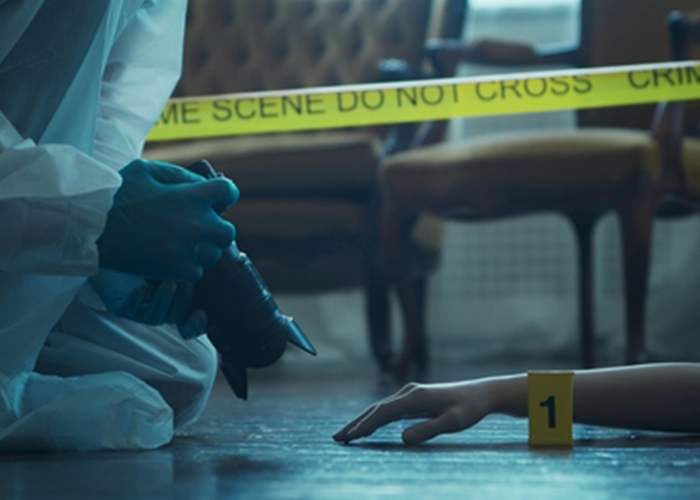
Murdoch University is using extended reality technology to reshape how crime scene investigation is taught, giving students hands-on experience in virtual environments that replicate the complexity of real-world forensic work.
The university has partnered with Australian technology company ForensicXR to integrate virtual reality and extended reality tools into its forensic science teaching. The technology creates immersive, interactive crime scenes that allow students to practise investigative techniques that are difficult or impractical to recreate physically.
The ForensicXR program has been trialled by Murdoch University students, Western Australia Police and forensic investigators at the Digital Immersive Laboratory in the Boola Katitjin academic building on the university’s Perth campus.
Associate Professor Paola Magni said the technology addresses long-standing challenges in forensic education.
“Crime scenes come in many forms, and it is often difficult to train students using real materials such as blood stains, firearms or drugs,” she said. “With ForensicXR, students and investigators can step into a different world – the world of investigation in extended reality. This kind of hands-on experience is invaluable.”
Magni said the approach reflects a broader shift toward active, technology-enabled learning.
“Gamification and immersive learning require active involvement,” she said. “By engaging students’ hands, eyes and minds, the skills they develop are more likely to stay with them. This is not just about forensic techniques, but about understanding how technology will shape their future work.”
ForensicXR was developed by chief executive Kirk Duncan and uses Meta Quest virtual reality headsets to generate a wide range of fictitious crime scenes or recreate real-world locations from anywhere in the world.
“The technology allows students to practise and refine their skills in a safe and controlled environment,” Duncan said. “From a policing perspective, it also enables officers to re-examine real-world crime scenes to strengthen investigative outcomes.”
The system also supports greater accessibility in forensic training. Magni said students with mobility limitations or disabilities can participate fully in investigations that would otherwise be inaccessible.
“We recently had a student recovering from knee replacement surgery who could not attend a bushland investigation,” she said. “They were still able to take part through ForensicXR.”
Murdoch University plans to continue using the platform as part of its teaching, with Meta Quest headsets purchased for ongoing student access.
The initiative builds on the university’s established forensic science programs, delivered through the School of Medical, Molecular and Forensic Sciences. In 2026, Murdoch University is introducing a new Bachelor of Forensic Sciences degree, expanding its undergraduate and postgraduate offerings in the field.